


Blanket Boxes & Trunks








Frequently Asked Questions
In practice the three words overlap considerably and are often used for the same object. Where a distinction exists, it comes down to original purpose and construction. A blanket box is a domestic piece with a flat lid and a clean, unfussy profile, designed to sit in a bedroom or living room and built to store household textiles. A storage chest is a broader term that takes in blanket boxes and coffers, and 'chest' often suggests something older or heavier, particularly the plank-built oak pieces of the 17th and 18th centuries. A trunk was originally a travelling chest, built to withstand the rigours of transport. The photographs and description tell you more than the noun does, so read the dimensions, the timber and the construction.
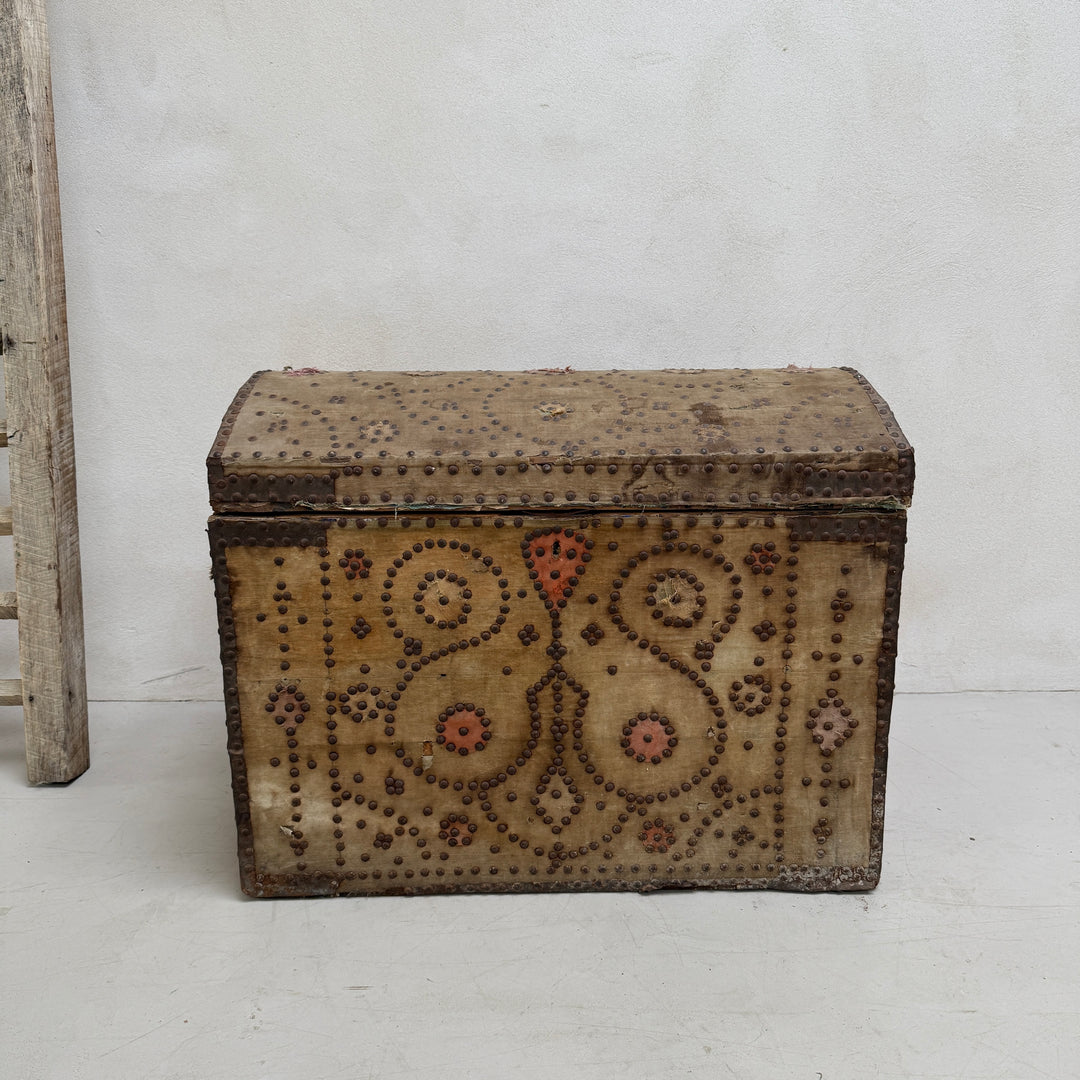
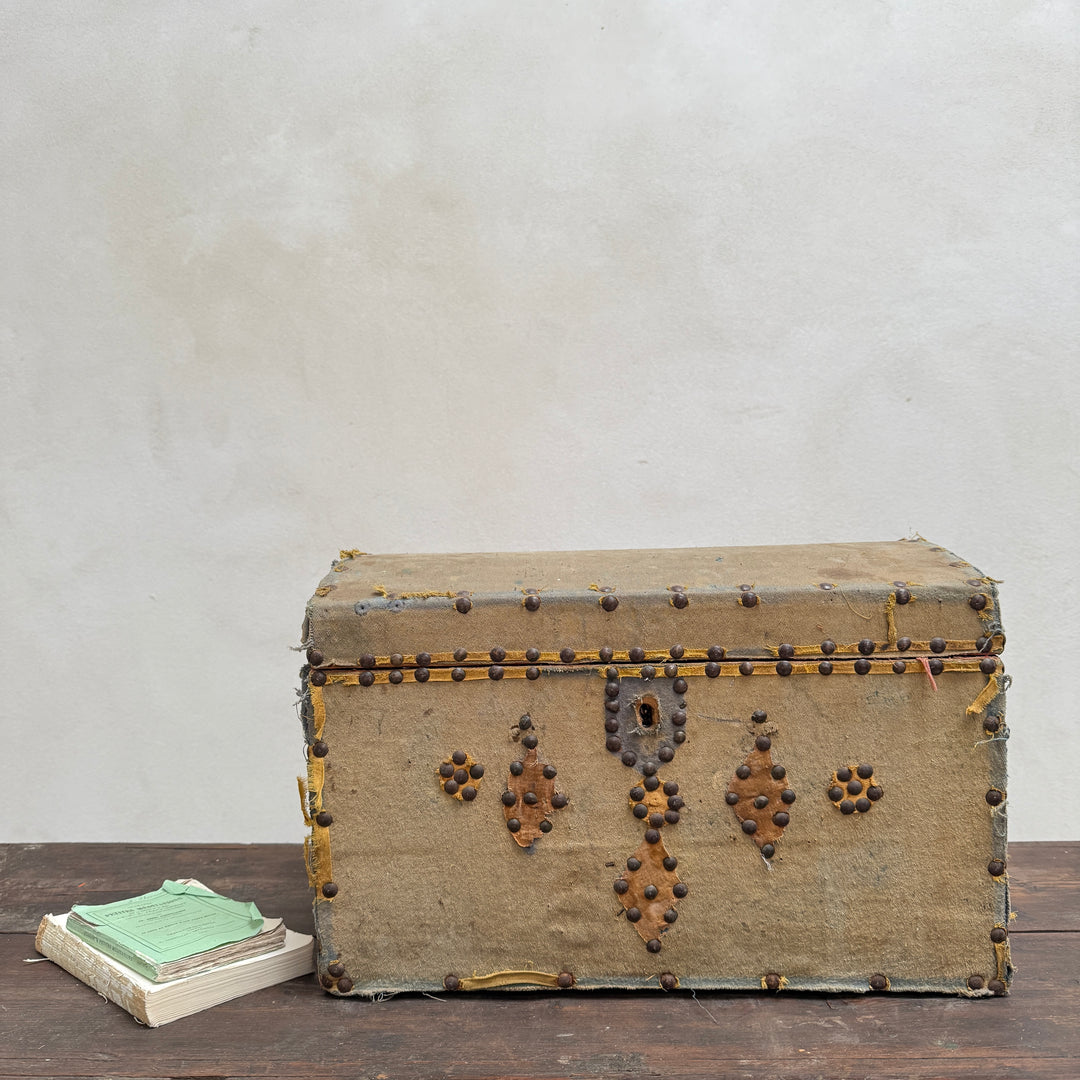
The collection is a mix of three kinds of piece. Antique pieces are genuinely old, typically over 100 years, and include the Victorian pine and oak blanket boxes, the Indian dowry chests, the hand-painted marriage chests and various trunks. They carry original hardware, original finishes and the honest wear of a long life, and each one is unique. Vintage pieces fall between antique and new, generally between 30 and 100 years old. Reclaimed timber pieces are new in construction but made entirely from salvaged solid timber, primarily reclaimed teak sourced from dismantled buildings and structures, and the wood itself may be 50 to 100 years old. Pieces such as the Briggs Reclaimed Teak Blanket Box and the Reclaimed Wooden Storage Trunk Barrington are built using traditional joinery. There are no reproductions in the collection.
Start with three measurements: width, depth and height. Map the footprint on the floor before anything arrives, and check that the lid can open fully without catching on a bed frame or a nearby radiator, as a lid that has to be opened at an angle quickly becomes an inconvenience. If the box will sit at the foot of a bed, leave enough space to walk around it comfortably. Most blanket boxes stand between 45cm and 55cm tall, which is comfortable both for reaching inside and for perching on briefly. A box that is too tall can feel imposing at the foot of a bed, while one that is too low may look out of proportion and offer less useful storage depth. The collection ranges from compact antique trunks to extra-large pieces, and each product listing includes full dimensions to check against your space.
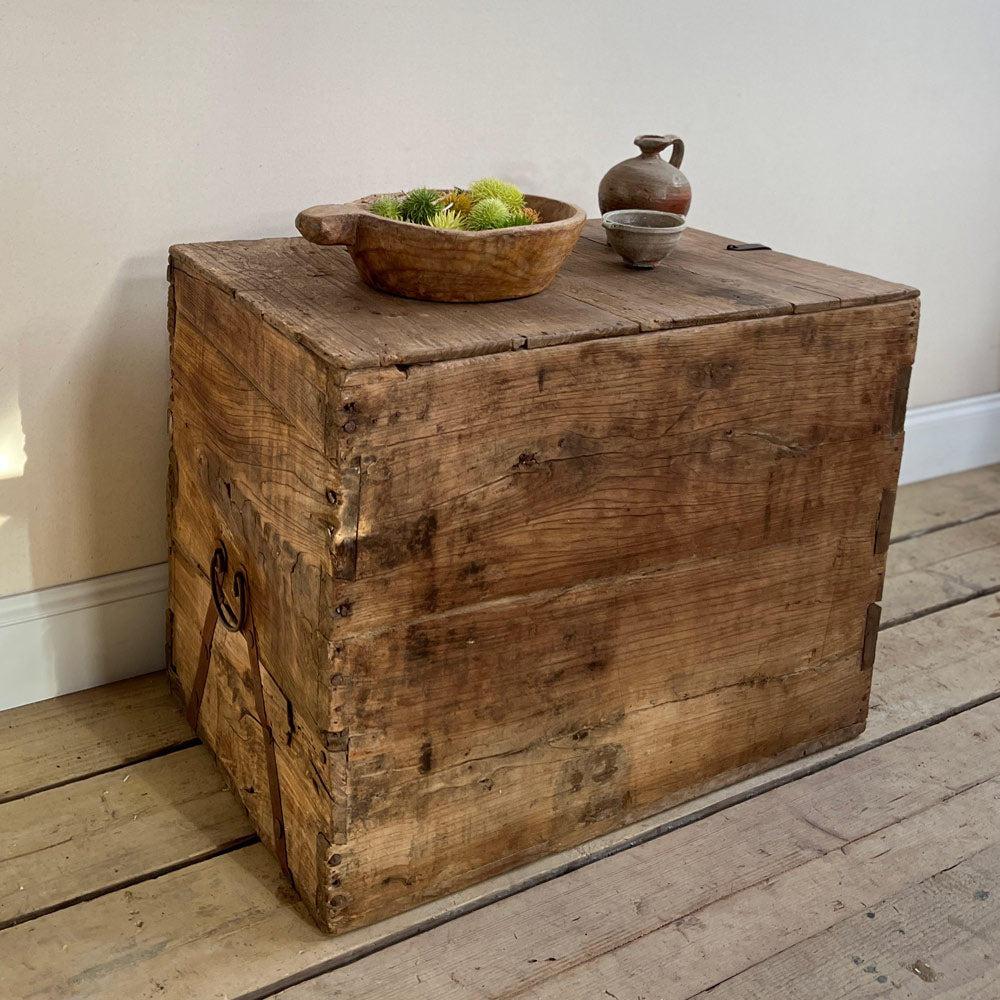
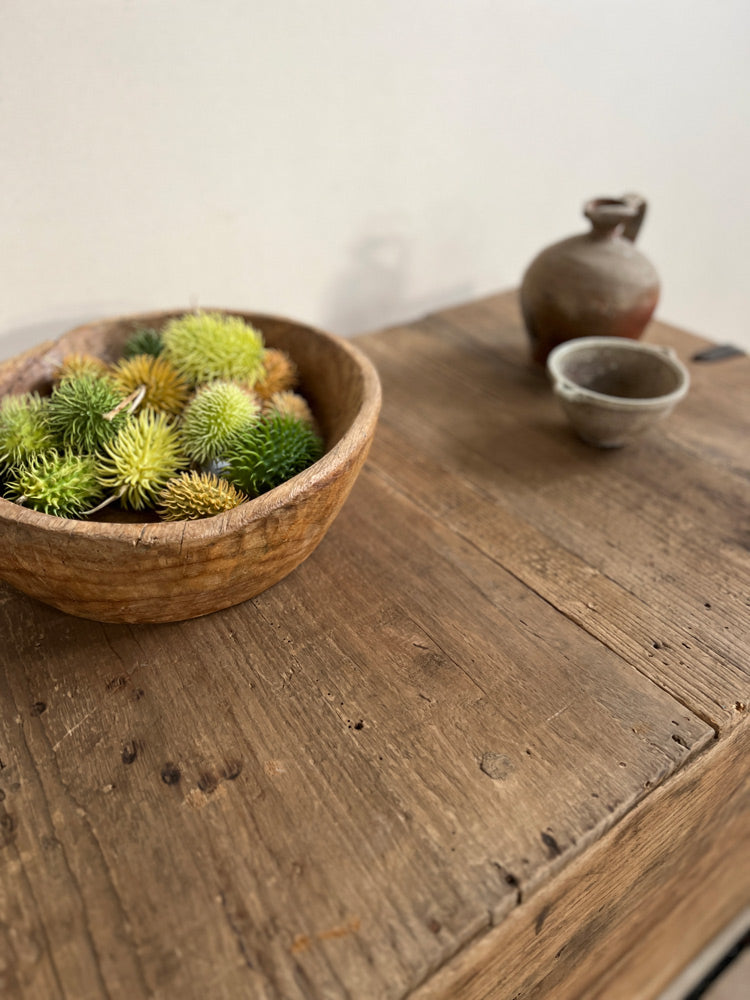
The majority of pieces are solid teak, solid pine or solid oak, with no veneers and no engineered board. Solid timber can be cleaned, lightly sanded and repaired over decades, which a veneer on chipboard cannot. Teak is the most prominent timber, found in antique Indian pieces and in our own reclaimed designs such as the Briggs Reclaimed Teak Blanket Box. It is exceptionally dense and naturally resistant to moisture, insects and warping, and it develops a silver-grey patina when left untreated or a rich warm tone when oiled. Pine is the timber most commonly associated with Victorian blanket boxes in Britain. It is lighter and softer than teak or oak, so easier to move around, and it takes paint and wax well. Antique pine pieces often keep their original stripped or waxed finish, which is straightforward to maintain. Oak is the hardest and heaviest of the three, with a long history in British furniture making, and it resists fungal growth and wears extremely well over generations. Some of the more unusual pieces, including the hand-carved Indian chests and the hand-painted marriage chests, are made from regional hardwoods that vary by piece, with full material details on each product page.
More than most people expect. The obvious answer is bedding: spare duvets, blankets, pillows and seasonal throws that do not need to live in a wardrobe but do need to be kept clean and accessible. Beyond that, blanket boxes work well for extra bed linen and pillowcases, out-of-season clothing, toys and games in children's rooms, books and magazines in a sitting room, logs and kindling beside a fireplace, and cushions and decorative textiles between uses. Solid timber boxes breathe naturally, which suits textiles better than sealed plastic containers, where mustiness can develop. For delicate fabrics or woollens, a few cedar balls or some dried lavender inside will help deter moths without any chemical treatment. Antique and reclaimed timber boxes are built to last, but lids are not designed to bear heavy loads over time, so store lighter, compressible items rather than stacking heavy books.
Yes, and many are well suited to it. A flat-lidded box at around 45 to 55cm is a comfortable height to perch on, and solid timber construction means the box can take the weight without concern. That is why they work well in hallways, where a seat for pulling on boots is useful, and in children's rooms as a toy box that doubles as a bench. Three things are worth checking before using one as a regular seat. The lid should open and stay open on its own, as a lid that slams shut unexpectedly is not suitable in a household with young children. Solid timber is smooth but not padded, so a folded blanket or simple cushion makes longer sitting more comfortable. And a well-made antique or reclaimed timber box is heavy enough not to shift underfoot, but lighter pieces or those with decorative feet are worth checking before regular use. The domed-lid trunks in the collection are not suited to use as seats, as the curved profile makes sitting on them impractical.
Yes, and it is one of the most practical uses for a flat-lidded chest in a living room. The top gives you a generous surface for books, candles and drinks, while throws, board games and the general overflow of a sitting room stay out of sight underneath the lid. Height is the key measure: a standard coffee table sits between 40 and 50cm tall, and most blanket boxes fall within that range. The Reclaimed Wooden Storage Trunk Barrington is a good example, broad, flat-lidded and built from reclaimed timber. Use coasters for drinks and a tray to group objects, which also makes the surface easier to clear when you need to open the storage below. As a rough guide, the coffee table should be about two-thirds the length of the sofa and close enough to reach without leaning forward uncomfortably. Consider too how the lid opens relative to the seating around it, as a box that requires moving a chair to open fully will quickly become storage that never gets used.